Intel's EMIB vs Advanced Fan-Out: Why Horizontal Beats Vertical for AI Workloads
 P. Nakamura
The packaging world has gone vertical-crazy. Every foundry presentation shows towering 3D structures with through-silicon vias threading memory dies above compute chiplets. Advanced fan-out packaging gets the spotlight, promising maximum density through vertical stacking.
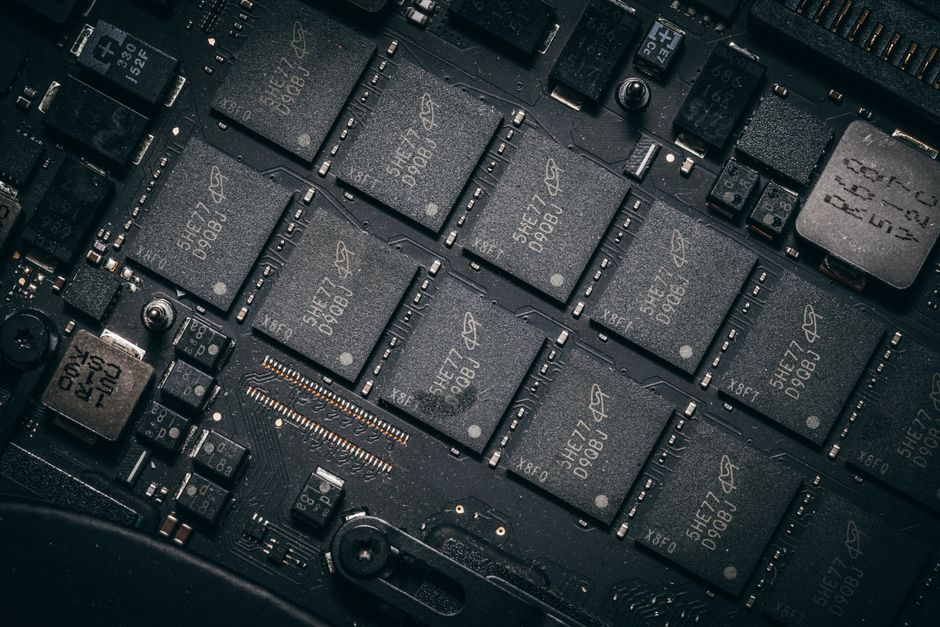
But Intel's EMIB (Embedded Multi-die Interconnect Bridge) tells a different story, one where horizontal integration wins the performance battle for AI workloads.
The EMIB Advantage: Shorter Paths, Higher Bandwidth
EMIB works differently than vertical approaches. Instead of stacking dies like pancakes, it places them side-by-side on a silicon interposer bridge. Think of it as a highway system connecting neighboring cities rather than building skyscrapers.
This horizontal approach delivers three key benefits:
Thermal management stays manageable. Vertical stacking creates heat chimneys. The bottom die gets cooking oil hot while the top die runs relatively cool. EMIB spreads thermal load across the package plane, letting heat dissipate more evenly.
Signal integrity remains clean. Through-silicon vias in vertical packages introduce parasitic capacitance and inductance. EMIB's horizontal traces run shorter distances with predictable electrical characteristics. The physics simply work better.
Manufacturing yields stay higher. Advanced fan-out requires precise die placement in multiple Z-axis layers. One misaligned die kills the entire stack. EMIB assembly happens in a single plane, easier to inspect, easier to rework.
graph LR
    A[CPU Chiplet] -->|EMIB Bridge| B[GPU Chiplet]
    B -->|EMIB Bridge| C[Memory Controller]
    C -->|EMIB Bridge| D[I/O Die]
    E[Heat Spreader] --> A
    E --> B
    E --> C
    E --> D
Where Vertical Falls Short
Advanced fan-out packaging sounds compelling on paper. Stack HBM memory directly above GPU compute units. Minimize wire length. Maximize density.
The reality proves messier. Vertical packages create thermal bottlenecks that limit sustained performance. AI training runs push chips hard for hours, exactly when thermal constraints bite hardest.
Vertical integration also complicates power delivery. Each stacked layer needs clean power, but vertical power distribution networks create voltage drops and noise coupling between layers. EMIB packages route power horizontally with dedicated power delivery networks per chiplet.
Real-World Performance Data
Intel's Ponte Vecchio GPU demonstrates EMIB's effectiveness. The package connects 47 tiles using EMIB bridges, delivering 128GB HBM memory bandwidth and 1.5TB/s die-to-die communication.
Compare that to AMD's MI300X vertical approach. While impressive, it throttles under sustained AI training loads due to thermal constraints. The vertical memory stack becomes a heat trap.
Nvidia recognized this limitation in Hopper H100 design. Rather than pure vertical integration, they use a hybrid approach, some vertical stacking for memory, but horizontal placement for compute dies.
Manufacturing Economics Matter
EMIB offers another advantage: cost. Advanced fan-out packaging requires expensive TSV processing and complex multi-layer assembly. EMIB uses standard silicon interposer technology with mature manufacturing processes.
The economics become decisive at scale. Hyperscale data centers buy thousands of AI accelerators. A 15% cost reduction per package translates to millions in savings across a deployment.
The Future Remains Horizontal
Next-generation AI workloads will stress packages even harder. Large language model training requires sustained high-bandwidth communication between compute and memory subsystems. Thermal management becomes more stringent, not less.
EMIB's horizontal integration philosophy aligns better with these requirements. It prioritizes thermal performance and signal integrity over pure density metrics.
Vertical packaging has its place, mobile applications where space constrains everything, or specialized workloads with different thermal profiles. But for the AI training workloads driving today's semiconductor innovation, horizontal wins.
Intel bet on the right horse with EMIB. Sometimes the boring solution that works beats the flashy one that struggles with physics.
Get Chiplet Ecosystem in your inbox
New posts delivered directly. No spam.
No spam. Unsubscribe anytime.