How Silicon Interposers Beat Organic Substrates in High-Bandwidth Chiplet Designs
 P. Nakamura
How Silicon Interposers Beat Organic Substrates in High-Bandwidth Chiplet Designs
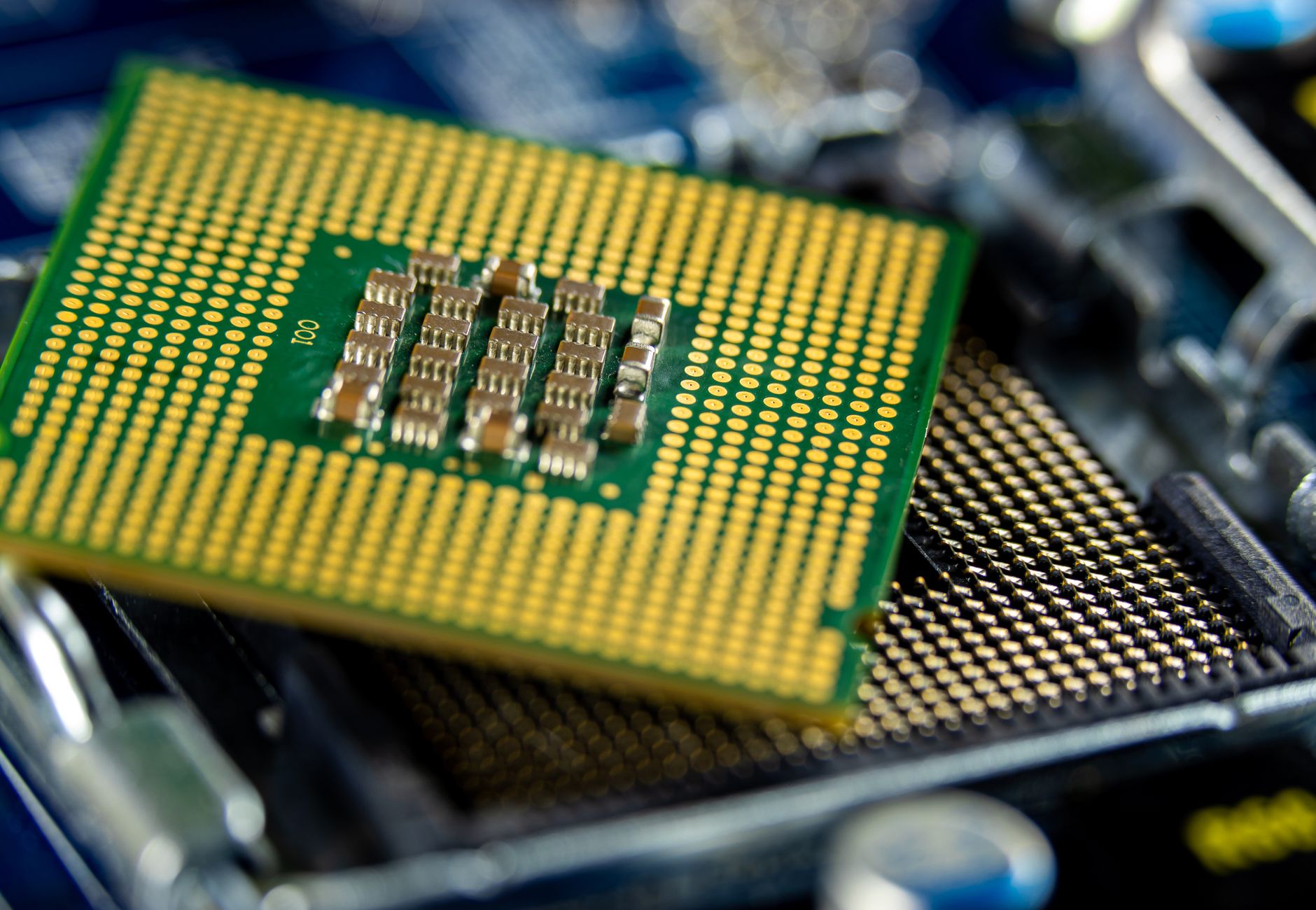 Photo by Sergei Starostin on Pexels.
Choosing between silicon interposers and organic substrates isn't just about cost. When you're pushing terabytes per second between compute chiplets, the physics of your interconnect medium determines whether your design works or melts.
Organic substrates seem appealing initially, cheaper to manufacture, easier to route, familiar to most packaging engineers. But they hit a wall around 25 Gbps per differential pair. Silicon interposers? They laugh at 56 Gbps and keep going.
Why Organic Substrates Struggle with Speed
The problem lives in the dielectric. Organic substrates use polymer-based materials with dielectric constants around 3.5-4.0 and loss tangents that spike above 10 GHz. What does this mean for your chiplet design?
Signal integrity collapses. High-frequency components of your data signals get absorbed as heat; crosstalk between adjacent traces becomes unbearable. You end up spacing traces so far apart that routing density plummets.
Most organic substrates max out around 2-3 metal layers for high-speed signals. Try to add more layers, and via stubs create resonances that kill your eye diagrams.
graph LR
    A[High-Speed Signal] --> B{Organic Substrate}
    B --> C[Dielectric Loss]
    B --> D[Via Stubs]
    B --> E[Crosstalk]
    C --> F[Signal Degradation]
    D --> F
    E --> F
Silicon Changes the Game Completely
Silicon interposers flip every disadvantage into strength. The dielectric constant drops to 11.9 (higher, but consistent), while loss tangent stays flat across frequency. More importantly: you get access to semiconductor fabrication processes.
Trace widths shrink from 25 microns down to 2 microns. Via pitch tightens from 100 microns to 5 microns. Suddenly you can route thousands of connections in the same footprint that organic substrates handle hundreds.
TSMC's CoWoS platform demonstrates this beautifully. Their latest iteration supports over 8,000 connections per square millimeter, impossible with organic substrates.
The Bandwidth Math That Matters
Consider a typical AI training chiplet requiring 2 TB/s of inter-die bandwidth. Using 56 Gbps PAM4 signaling:
- Silicon interposer: 4,000 differential pairs in a 15mm x 15mm area
- Organic substrate: Maybe 800 pairs in the same space
The silicon solution delivers your target bandwidth with room to spare. The organic approach? You'd need a package twice the size, assuming you could even close timing at those trace lengths.
Here's where it gets interesting: silicon interposers enable much shorter electrical paths. Your average trace length drops from 8-10mm on organic to 3-4mm on silicon. Shorter traces mean lower latency, reduced power, and easier timing closure.
Cost Reality Check
Silicon interposers cost more per unit area, typically 3-5x organic substrates. But you're not buying area; you're buying bandwidth density.
Break down the cost per gigabit of bandwidth, and silicon often wins. Factor in the reduced package size, simplified board design, and higher yields from better signal integrity? The economics shift dramatically.
AMD learned this lesson with their MI300 series. Despite higher material costs, the silicon interposer enabled a memory bandwidth that would've been impossible with organic packaging. The performance premium justified every additional dollar.
When Organic Still Makes Sense
Not every chiplet design needs silicon's capabilities. Control plane traffic, low-speed I/O, and power delivery can work fine on organic substrates. Many successful designs use hybrid approaches: silicon interposers for the high-bandwidth core, organic substrates for everything else.
Intel's Ponte Vecchio exemplifies this strategy. The compute tiles connect through EMIB silicon bridges, while platform I/O uses conventional organic routing. You pay for silicon only where physics demands it.
The Engineering Decision
When your chiplet-to-chiplet links exceed 20 Gbps, start planning for silicon. When you need more than 1,000 high-speed connections, organic substrates become impractical. When latency matters as much as bandwidth, silicon wins decisively.
The future belongs to heterogeneous packaging: silicon where speed matters, organic where cost matters. But for the compute-intensive workloads driving chiplet adoption, silicon interposers aren't luxury, they're necessity.
Get Chiplet Ecosystem in your inbox
New posts delivered directly. No spam.
No spam. Unsubscribe anytime.