Why AMD's MI300X Beats Nvidia's H100 at the Package Level
 P. Nakamura
The AI accelerator war isn't just about transistor count or memory bandwidth. It's about how you stitch silicon together.
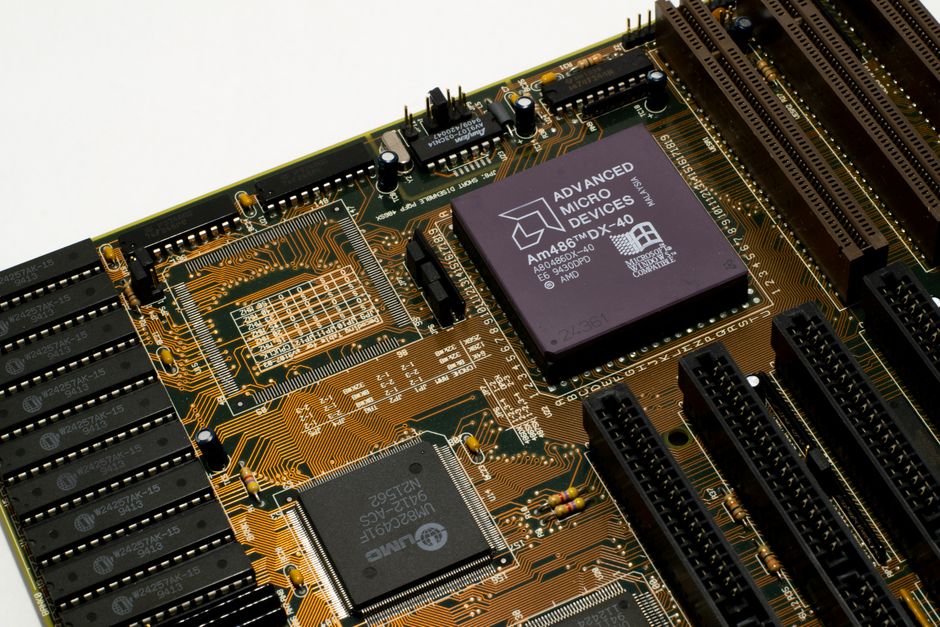
AMD's MI300X APU represents the most aggressive bet on advanced packaging in production today. While Nvidia's H100 relies on a monolithic GPU die paired with separate HBM3 stacks, AMD went full chiplet: eight compute dies, four memory controllers, and 24 HBM3 stacks, all connected through a massive 2.5D interposer.
This isn't just an engineering flex. The packaging choice drives real performance advantages.
Memory: More Than Just Capacity
Start with the numbers that matter. MI300X delivers 192GB of HBM3 versus H100's 80GB. That's 2.4x more memory, but the story runs deeper than raw capacity.
AMD's approach distributes memory controllers across four dedicated dies rather than cramming them onto the main compute silicon. Each memory controller die manages six HBM3 stacks directly through the interposer. No long traces, no routing compromises, just clean, short connections that minimize latency and power.
Compare this to H100's approach: a single GPU die trying to manage all memory traffic while also handling compute workloads. Physics matters here. The farther HBM stacks sit from the memory controllers, the more signal integrity issues you face.
graph TD
    A[Compute Die 1] --> I[Silicon Interposer]
    B[Compute Die 2] --> I
    C[Memory Controller Die 1] --> I
    D[Memory Controller Die 2] --> I
    E[HBM3 Stack 1] --> I
    F[HBM3 Stack 2] --> I
    G[HBM3 Stack N] --> I
    I --> H[Package Substrate]
Yield Economics That Actually Work
Monolithic dies look elegant in block diagrams. They're nightmares in the fab.
H100's GPU die measures roughly 814mm². At that size, you're gambling with defect density every time TSMC pulls a wafer. One bad transistor kills the entire die.
MI300X splits compute functions across eight smaller dies, each around 150-200mm². Defects that would kill an H100 just knock out one-eighth of an MI300X's compute capability, and AMD can bin parts accordingly.
The economic impact? AMD can harvest partially defective silicon and sell it as lower-tier SKUs. Nvidia throws away entire H100 dies when defects hit the wrong spot.
Thermal Distribution Done Right
Heat density kills performance. Always.
Cramming 700+ watts of compute into a single large die creates thermal hotspots that force frequency throttling. MI300X spreads that same power budget across eight separate dies with dedicated thermal pathways.
Each compute die can run at higher sustained frequencies because heat generation gets distributed across the package. The interposer itself acts as a thermal spreader, moving heat away from hotspots more effectively than a monolithic approach.
The Manufacturing Reality Check
Packaging complexity cuts both ways. MI300X requires precise alignment of 32 separate silicon pieces (8 compute + 4 memory controller + 20+ HBM stacks) on a single interposer. That's a manufacturing nightmare compared to H100's simpler assembly.
But AMD made this bet because they understood something Nvidia missed: AI workloads are memory-bound, not compute-bound. Better to solve the memory problem with advanced packaging than fight physics with bigger monolithic dies.
TSMC's CoWoS-S technology makes MI300X possible, but AMD had to co-design the silicon and package from day one. You can't retrofit this level of integration.
Performance Per Watt Wins
Benchmarks tell the real story. MI300X consistently delivers better performance per watt than H100 in large language model training and inference. The packaging advantage translates directly to lower operating costs in data centers.
When you can keep more model parameters in local memory without swapping to system RAM, everything runs faster. MI300X's 192GB capacity means fewer memory hierarchies, fewer bottlenecks, and more time spent computing instead of moving data around.
Nvidia will respond, they always do. But AMD's MI300X proves that packaging innovation can overcome pure process node advantages. Sometimes the most important competition happens in the back-end of the fab, not the front-end.
Get Chiplet Ecosystem in your inbox
New posts delivered directly. No spam.
No spam. Unsubscribe anytime.