How Chiplet Serialization Overhead Drives Die Partitioning Decisions Before Any Bandwidth Budget Is Set
 P. Nakamura
Every chiplet design starts with a partition decision. Where you draw the boundary between dies shapes everything downstream: bump count, power allocation, latency budgets, even the choice of interconnect protocol. What gets discussed far too rarely is how serialization overhead bakes itself into that decision before any actual bandwidth number is on the table.
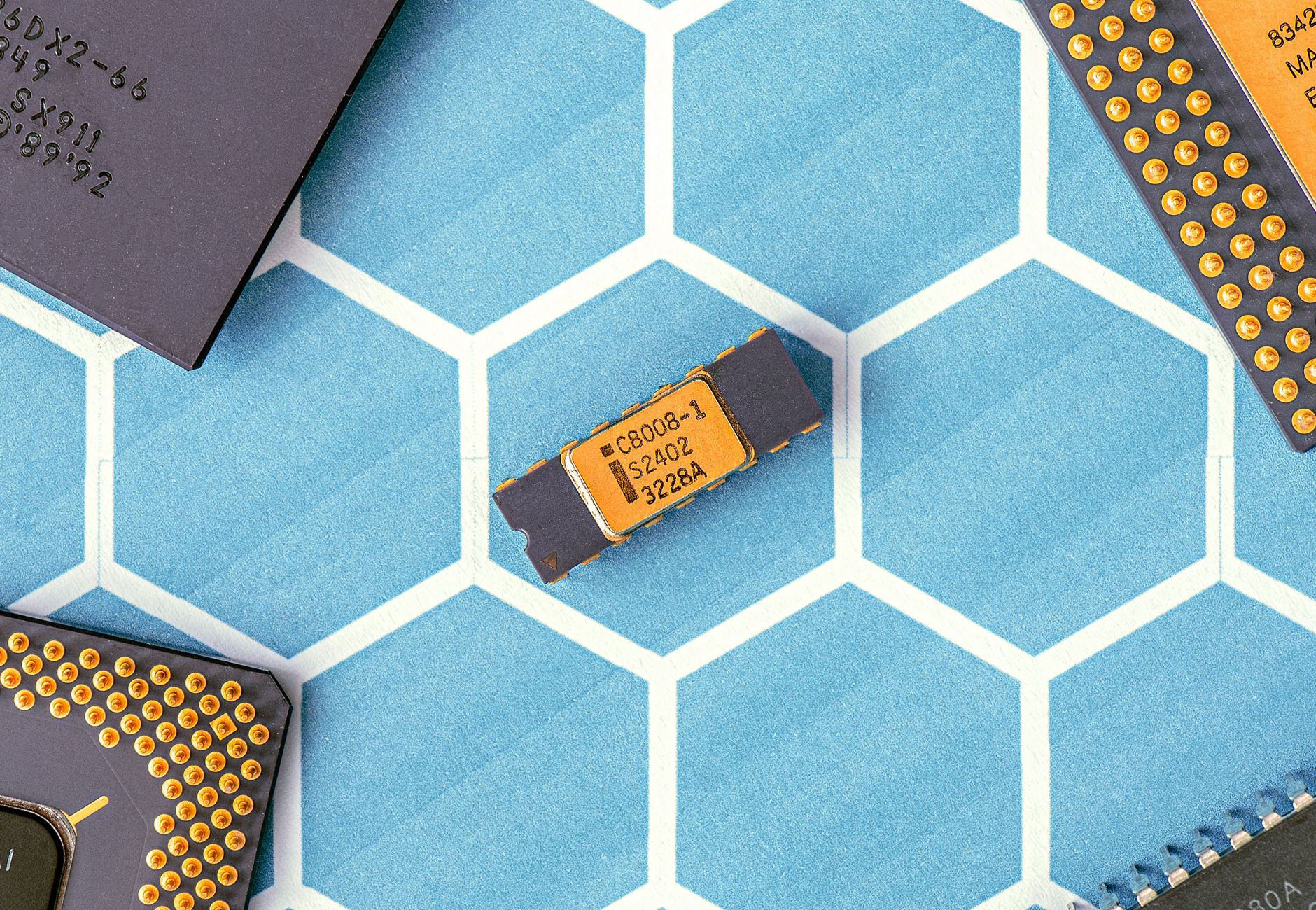 Photo by Jonas Svidras on Pexels.
Serialization is unavoidable the moment a signal crosses a die boundary through anything other than a native parallel interface. Physical bumps cost area and power, so most chiplet interconnects compress parallel buses into serial streams and rebuild them on the other side. That process has a cost. Two costs, actually: latency from the serialization and deserialization pipeline, and area from the encoding logic required to make the serial stream reliable.
At 112G PAM4, a single serializer lane introduces roughly 1 to 3 nanoseconds of pipeline latency per direction depending on the implementation. Stack a multi-stage encoder on top, add forward error correction, and the round-trip can approach 10 nanoseconds before a single useful bit of data moves. For a CPU-to-memory path or a GPU compute cluster talking to an HCI fabric, that number is not academic. It shows up directly in memory access latency and inter-die synchronization cost.
The deeper problem is that serialization overhead scales poorly with die count. Consider a design where a host die routes traffic through two intermediate chiplets before reaching a memory or I/O endpoint:
graph TD
    A[Host Die] --> B(Serializer Tx)
    B --> C[Bridge Chiplet]
    C --> D(Serializer Tx)
    D --> E[Memory Controller Die]
    E --> F{HBM PHY}
Each hop through a chiplet adds another serializer-deserializer pair. Two hops mean four serialization stages in a round trip. At 2 ns per stage, that is 8 ns of pure protocol overhead before accounting for any physical propagation delay across the package. Architects who discover this late, after partitioning logic around functional groupings, find themselves reassigning entire subsystems to reduce hop count.
The right move is to treat serialization budget as a first-order constraint during partitioning, not a consequence of it.
Protocol choice makes the problem worse or better depending on what you select. UCIe's raw data layer keeps encoding overhead relatively tight, but the transaction layer on top reintroduces credit-based flow control with its own handshake latency. CXL.mem over UCIe adds coherency semantics that require additional round trips for ownership transfers. If your partitioned subsystem needs coherent shared memory across die boundaries, every cache line bounce carries that serialization tax twice.
NVIDIA's NVLink-C2C, used in the Grace Hopper Superchip, sidesteps much of this by using a custom protocol tuned specifically for low-latency CPU-to-GPU coherency. The serialization pipeline is shallower because the protocol was designed around that one use case. That specificity is a legitimate engineering choice; a general-purpose interconnect protocol will always carry more overhead than one optimized for a single traffic pattern.
For teams that don't have the luxury of a custom protocol, the practical answer during partitioning is to keep latency-sensitive paths on the same die wherever reticle size permits. Functions that tolerate asynchronous, bursty communication, think storage controllers, display engines, or background telemetry processors, are better partition candidates precisely because they can absorb serialization latency without impacting the critical path.
A related consideration is encoding efficiency. 8b/10b encoding wastes 20 percent of raw lane bandwidth on overhead. 128b/130b drops that to under two percent, which is why it dominates modern SerDes designs. But even at 128b/130b, the physical circuitry for clock data recovery and elastic buffering consumes die area that could otherwise hold logic. On a pad-limited die where every square micron of perimeter is spoken for, the serializer area budget directly constrains how many lanes you can afford, which feeds back into the partition decision.
Quantifying this before partitioning means building a simple latency and area model: lanes required times serializer area per lane, plus encoding pipeline depth times clock period, summed across all die boundaries in the proposed topology. That model will not be precise, but it does not need to be. Even rough numbers reveal which partition proposals spend most of their interconnect budget on protocol overhead rather than payload delivery.
Teams that run this analysis early tend to end up with fewer, wider die interfaces rather than many narrow ones. Fewer boundaries mean fewer serializer stages. Wider interfaces at each boundary push more payload per serialization event, improving effective bandwidth efficiency. The partition that looks clean on a block diagram often looks expensive once serialization overhead is priced in.
Get Chiplet Ecosystem in your inbox
New posts delivered directly. No spam.
No spam. Unsubscribe anytime.